


High Security Perimeter Projects Carry Real Consequences.
Regulatory pressure, critical infrastructure obligations, and tight delivery windows leave little room for error, and even less tolerance for a security specification that doesn’t fit the site.
That’s Where Alexandra Come In
We’re a specialist, not a generalist, and that focus makes all the difference. We’re focused, responsive, and genuinely invested in the outcome of your project in a way that standard suppliers rarely are.
Every Site Is Different
A solution that’s right for one installation may be over-engineered, non-compliant, or simply unworkable on another. We bring the technical expertise to understand those differences, and a portfolio of adaptable, proven products to solve them, without pushing you toward a one-size-fits-all specification.
Involve us early; at planning, design, and risk assessment, and we’ll help you reduce risk, sharpen your tender submissions, and get projects over the line with fewer delays and less uncertainty.
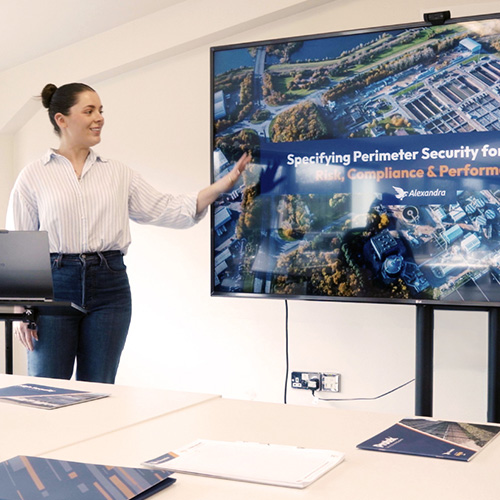



What Effective Perimeter Protection Looks Like
A well-designed security solution does more than install a physical barrier and hope for the best. The most effective perimeter protection takes a layered approach, combining the right fencing system, the right gates, the right deterrent measures, and the right specification for the site, so that each element reinforces the next to deter intruders.

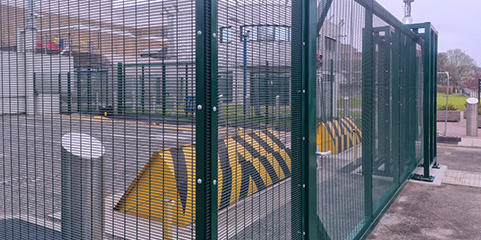
The choice of security fencing has a direct bearing on how effectively a perimeter deters and delays intrusion. Mesh fencing, such as twin-wire and single-wire systems, offers a robust, cost-effective perimeter for a wide range of sites. Where the threat level is higher, LPCB-rated high security fencing provides independently tested, certified resistance to forced entry. The Protek Elite range includes SR1-rated systems designed to resist opportunistic attack, and SR2-rated systems capable of withstanding more determined attempts using bolt cutters, drills, and claw hammers. Palisade fencing offers an alternative where a more visible, imposing physical barrier is required.
Getting the fencing specification right, matching the product to the threat level and site conditions, is one of the most important decisions in the design process and one of the areas where involving Alexandra early makes the most difference.
Fencing designed to make climbing extremely difficult, with tight mesh apertures that deny footholds and panels that flex under load, is a key consideration on high-security sites. Where the security level demands it, razor wire and barbed wire toppers can be added to increase the time required to breach the perimeter, buying critical response time. The right combination depends on the threat assessment and the aesthetic requirements of the site.
A fence is only as strong as its weakest opening. Security gates matched to the specification of the fencing system ensure the perimeter performs consistently at every access point, preventing unauthorised access through openings as well as through the fence line itself. Car park barriers provide an additional layer of control at vehicular entry points, restricting access to authorised personnel and protecting against opportunistic vehicular intrusion.
Thoughtful site layout, exterior lighting, clear sightlines, and warning signage all contribute to deterring potential intruders before they test the fence. A well-lit, clearly defined perimeter with visible high security fencing sends a clear signal that the site is protected, reducing the likelihood of an attempt in the first place. On sites adjacent to public spaces, aesthetic requirements must be balanced carefully against the need for robust perimeter protection, and the specification needs to reflect both.
LPCB certification under LPS 1175 provides independently verified evidence that a fencing system will resist forced entry to a defined security rating, and is increasingly required by insurers, regulators, and clients on critical infrastructure, data centre, and government projects. The UK’s Secured by Design programme also recommends security-rated fencing for projects requiring higher levels of protection. Getting the specification right from the outset ensures the finished installation meets its compliance obligations and avoids the cost and disruption of remediation later.
Working In Partnership
Every site, every project, and every challenge is different. A one-size-fits-all approach simply doesn’t work when you’re protecting critical infrastructure, high-value assets, or sensitive environments. That’s why we’ve developed a practical, collaborative methodology that ensures the best possible result from start to finish – Assess, Design, Deliver.
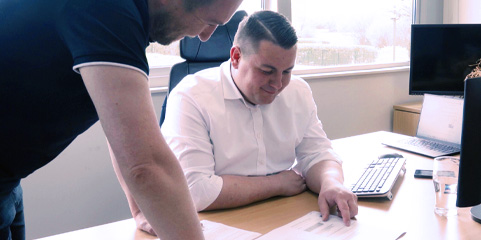

What To Expect From A Consultation With Alexandra Security
Many clients come to us unsure of exactly what they need for physical security. That’s precisely why the consultation exists for our security systems. Here’s how it typically runs:
Step 1: Initial Conversation
A brief call or meeting to understand the project at a high level. What is the site? What are the key risks? What stage is the project at? This takes 20-30 minutes and helps us understand where we can add the most value. There’s no obligation and no sales pressure.
Step 2: Site Survey and Risk Assessment
Where appropriate, we’ll carry out or support a site survey, reviewing existing drawings, identifying vulnerabilities, and assessing the threat landscape. For critical infrastructure projects, we’ll work alongside your team to understand the regulatory and compliance framework the solution needs to meet.
Step 3: Specification Development
We develop a perimeter security specification tailored to your site, including product recommendations from our security fencing range, gate layouts, access control integration points, and any detection or surveillance requirements. CAD drawings and technical documentation are produced to support tender submissions and contractor briefings.
Step 4: Ongoing Support Through Delivery
Once the specification is in place, we remain available to support the installation process, liaise with delivery partners, answer technical queries on site, and ensure the finished perimeter meets the original design intent. Our 15-year product guarantee provides long-term reassurance after handover.
Our Team
Behind every great project is a team you can rely on. At Alexandra, you’ll always have direct access to real people who know your world inside out.

Fenton is your primary contact for high-level project coordination. He offers expert guidance on identifying the most effective perimeter solution for your project, ensuring that strategy and practicality align seamlessly.

Milly collaborates with clients to perfect every aspect of the project specification. From detailed technical documentation and BIM integration to comprehensive support materials, she ensures precision and clarity throughout the design phase.

Brendan is one of our most experienced staff, and has decades of knowledge on perimeter security. With deep technical insight, he advises on what is feasible and helps manage projects from concept through to practical solutions.

Liam delivers expert technical and pricing support, helping you achieve the best value without compromising quality. His estimating expertise ensures accurate costing and efficient project delivery.

Dave supports projects with polished marketing and sustainability resources, including photography, videography, and tailored messaging. He also advises on effectively positioning sustainability as a key project strength.
Expertise Across Utilities & Infrastructure
High security perimeter projects in infrastructure carry real consequences. Regulatory pressure, critical infrastructure obligations, and tight delivery windows leave little room for error, and even less tolerance for a security specification that doesn’t fit the site. That’s where Alexandra come in. We’ve helped deliver perimeter security to infrastructure projects across the UK. Here are some highlights:
High Security Fencing Experience Across Infrastructure
Discover our articles on high security perimeter fencing and how it applies to different sectors in the UK’s national infrastructure. From water, power generation, MoD and renewable energy, we have the experience partner on projects from initial design to fencing in the ground.

Understanding the Unique Security Challenges Facing Utilities Sites
Utilities sites sit at the centre of the UK’s critical national infrastructure with essential services such as electricity, water, gas, and wastewater treatment. Because these operations support entire communities and industries, the consequences of a security incident reach beyond the site perimeter.

Protecting Critical National Infrastructure: Why LPS 1175 Certified Fencing is Essential
Across the United Kingdom, the systems that power, connect, and sustain daily life, from energy and water to transport and digital communications, rely on an extensive network of sensitive facilities. Collectively defined as Critical National Infrastructure (CNI), these sites represent some of the nation’s most valuable assets.

Protecting Battery Storage Installations: Security and Safety for the UK’s Growing Energy Infrastructure
Battery storage systems are fast becoming a cornerstone of the UK’s transition to a low-carbon energy future. As more intermittent renewable energy sources like solar and wind come online, the need to store excess energy for use during peak demand has never been greater.