Published:
Across the United Kingdom, the systems that power, connect, and sustain daily life, from energy and water to transport and digital communications, rely on an extensive network of sensitive facilities. Collectively defined as Critical National Infrastructure (CNI), these sites represent some of the nation’s most valuable assets.
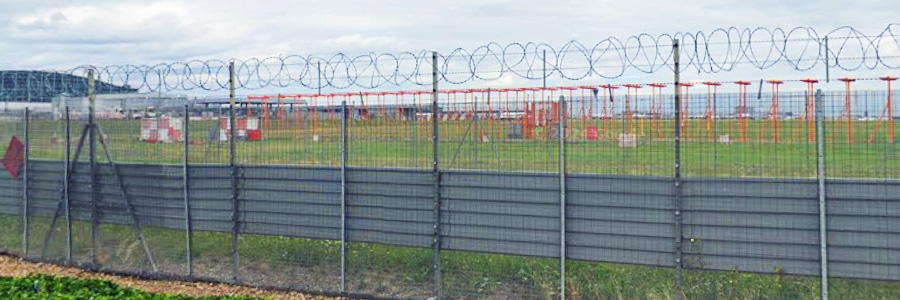
Safeguarding this infrastructure has always been important, but in recent years it has become increasingly vital to ensure that assets are properly protected. As threats grow in both scale and sophistication, from organised criminal activity and targeted vandalism to terrorism and cyber-physical interference, the need for proven, independently verified protection continues to rise. Among the most effective measures are high-security fencing systems certified to the LPS 1175 standard. These systems form a key part of a layered defence, providing a certified physical barrier that prevents unauthorised access, deters hostile activity, and helps maintain the uninterrupted operation of services essential to everyday life.
What Counts as Critical National Infrastructure (CNI)?
Critical National Infrastructure includes the assets, facilities, and networks essential to the UK’s safety, security, and economic stability. This spans the generation and distribution of electricity, water and waste management, airports, transport and logistics, data centres and communication networks, and facilities for fuel storage and emergency response.
Many of these sites are located in isolated or semi-rural areas, where effective physical protection is the first and most dependable line of defence. A single breach can have consequences that extend far beyond the perimeter; disrupting essential services, endangering public safety, and eroding national resilience.
To mitigate these risks, CNI operators must ensure that perimeter protection systems meet recognised standards for strength, delay time, and certification. Using LPS 1175-rated fencing demonstrates compliance with both government and insurer expectations, while providing tangible assurance that the nation’s most important infrastructure is physically secured against attack.
The Evolving Threat Landscape for Critical Infrastructure
The security environment surrounding critical infrastructure has changed dramatically in recent years. While traditional risks such as metal theft, trespassing, and vandalism continue to challenge operators, particularly at isolated facilities or those close to major transport routes, these issues are increasingly accompanied by more complex, coordinated, and targeted forms of attack. Organised criminal activity, politically driven protest, and deliberate sabotage now pose serious threats to the continuity of essential services.
At the same time, the line between physical and cyber risks is becoming ever more blurred. As operations become more digitised, the interconnection between physical assets and digital networks has created new vulnerabilities. A breach of a site’s physical perimeter can provide an entry point for compromising data systems, communications platforms, or critical control networks. In this integrated environment, physical and cyber security can no longer be treated as independent domains; each reinforces and depends on the other.
Against this backdrop, the physical perimeter remains a cornerstone of effective defence. Well-designed, certified fencing and gate systems do more than define boundaries; they delay intrusion, deter hostile intent, and enable early detection and response. By combining high-performance barriers with intelligent surveillance and access control, operators can create layered protection that strengthens resilience across both physical and digital domains.

Setting the Standard – What is LPS 1175 Certification?
LPS 1175 is a security performance standard developed by the Loss Prevention Certification Board (LPCB), part of the Building Research Establishment (BRE), a long-established organisation originally formed as a UK government research laboratory. The standard assesses the resistance of physical security products such as fencing systems, doors, enclosures, and shutters against forced entry.
Each product submitted for approval is independently tested under controlled conditions, with BRE specialists attempting to breach the system using a defined set of tools within specific time limits. The resulting classification, expressed as an SR (Security Rating) and Tool Category (A–H), indicates both the level of attack the product can withstand and the skill or determination required from an intruder.
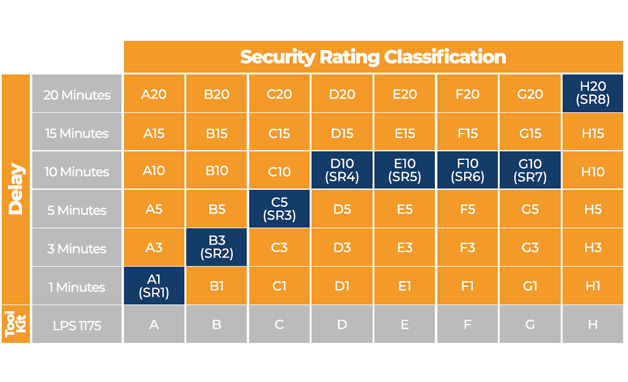
In practical terms, higher ratings correspond to products that resist more advanced tools for longer periods. For example, while lower SR levels (SR1/A1 fencing) simulate opportunistic attacks with simple hand tools, higher levels introduce power tools and more complex methods, representing a determined attempt at forced entry.
For many Critical National Infrastructure (CNI) applications, a system that can resist attack for at least three minutes using a more advanced toolset is often regarded as the minimum requirement. Within the LPS 1175 fencing framework, this equates to Security Rating 2 / Category B3 (SR2/B3), a level that offers a well-judged balance between visual deterrence, physical protection, and cost-effectiveness.
For a detailed explanation of how these ratings work across the full range of classifications, see our related article: Fencing Security Ratings Explained.

Why Certified Security Fencing is Essential for CNI Protection
For operators responsible for critical infrastructure, the physical perimeter represents the first and most visible line of defence against unauthorised access. A fence line that is independently tested and certified to security rating standards offers more than visual deterrence — it provides proven performance under simulated attack conditions. This assurance goes beyond design intent, demonstrating that the system has been rigorously verified to withstand real-world intrusion attempts.
High security certification gives specifiers, designers, and operators measurable confidence in a product’s resilience. It forms part of a structured compliance framework that aligns with the expectations of the National Protective Security Authority (NPSA), insurers, and other regulatory stakeholders. This verifiable level of protection supports broader risk management objectives by enabling operators to match perimeter performance to the specific threat profile of each site.
By contrast, fencing systems without independent certification can vary significantly in design, materials, and construction quality, creating uncertainty about their actual resistance to forced entry. In high-risk sectors such as energy generation, data storage, or water treatment, this uncertainty translates into potential vulnerability — both operationally and reputationally.
Selecting systems certified to Security Rating 2 (SR2) or Security Rating B3 (B3) provides a tested balance between strength, deterrence, and practicality. These solutions are engineered for integration with access control gates, vehicle barriers, and intrusion detection technologies, delivering a cohesive and layered defence. When deployed as part of a comprehensive security strategy, they reinforce both the resilience and reliability of the nation’s most vital assets.
Designing a Complete Perimeter Protection Strategy
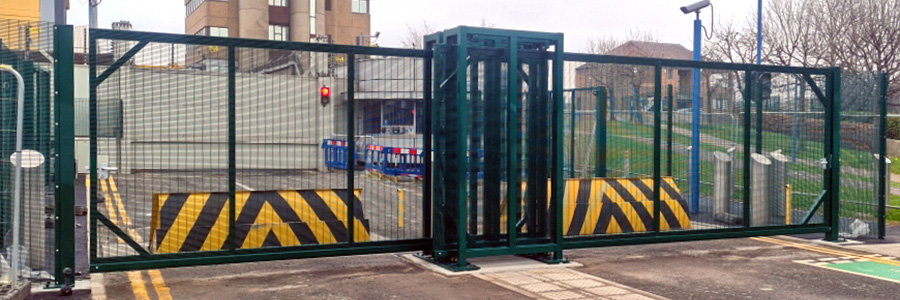
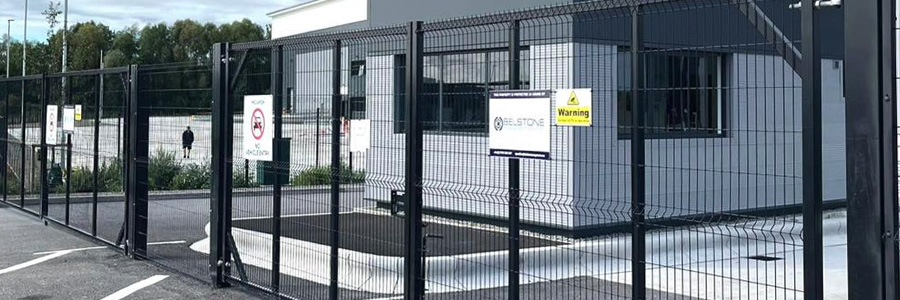
An effective perimeter security system is only as resilient as its weakest point. Even when a site invests in high-security fencing, the strength of the entire boundary can be compromised if adjoining components—particularly gates and access points—do not meet equivalent performance standards. A single vulnerable entry point can nullify the protective value of an otherwise robust barrier.
For Critical National Infrastructure (CNI) sites, it is therefore essential that all pedestrian and vehicle gates are certified to at least the same LPS 1175 security rating as the surrounding fence line. A gate that can be breached more easily than the adjacent fencing creates an exploitable gap, providing potential intruders with a direct point of access despite broader investment in certified systems.
This principle extends beyond main entry gates to include smaller openings such as emergency exits, maintenance access points, and service gates. These are often overlooked during specification but can represent significant vulnerabilities if not designed and constructed to the same standard. To ensure a consistent level of protection, every access point should incorporate certified components, including locks, hinges, posts, and fixings that align with the perimeter’s security rating.
Complementary measures such as rising arm barriers, bollards, and surveillance technologies can enhance site resilience, but the foundation of effective perimeter defence lies in consistency. By pairing security rated fencing with matching certified gates, operators create a uniform line of protection that eliminates weak spots, reinforces compliance with government and insurer requirements, and upholds the integrity of the entire boundary system.
Specifying the Right High Security Fencing System for Your Site
Designing an effective perimeter security solution for a critical infrastructure site begins with a thorough understanding of both the site’s risk profile and its operational requirements. The type of assets being protected, proximity to public access, and the expected response time of security personnel all play a central role in determining the appropriate LPS 1175 rating and overall system configuration.
For most Critical National Infrastructure (CNI) locations, a minimum-security rating of SR2 (B3) provides a robust level of protection, offering proven resistance to advanced hand and power tools for at least three minutes. However, for sites that are highly exposed, strategically significant, or where the consequences of a breach are severe, a higher classification such as SR3 (C5) may be warranted to ensure the required level of resilience.
In addition to security performance, specifiers should evaluate several key design and operational considerations:
- Visibility and integration: Assess whether the fencing should offer a strong physical deterrent while maintaining clear lines of sight for surveillance and CCTV monitoring.
- Environmental and terrain conditions: Consider ground composition, wind loading, temperature extremes, and surrounding vegetation or wildlife that may affect installation and maintenance.
- Maintenance and lifecycle costs: Ensure that the system remains compliant, durable, and serviceable throughout its operational lifespan, minimising downtime and long-term expense.
It is also important to recognise that installing high-security fencing often involves greater complexity than standard boundary systems. Choosing a design with engineered features that simplify installation—such as fewer fixings, flexibility to accommodate uneven terrain, and compatibility with mechanical lifting equipment, can significantly reduce on-site time and overall project costs.
By partnering with a trusted and experienced security fencing manufacturer, specifiers can balance these factors to achieve a tailored, standards-compliant solution that meets both operational and regulatory expectations. Alexandra Security provides a comprehensive range of LPS 1175-certified fencing and gate systems, including the Elite series, which have been independently tested and approved to meet the stringent demands of modern critical infrastructure protection.

Talk to Our Team About CNI Security Fencing
When it comes to protecting critical national infrastructure, there is no one-size-fits-all approach. Each site presents its own combination of risks, operational constraints, and access requirements. The right fencing system should not only meet the required certification level but also integrate seamlessly with your site layout and security strategy.
At Alexandra Security, our team has extensive experience supporting specifiers, contractors, and site operators in designing and delivering high-security fencing and gate systems for some of the UK’s most sensitive sites, from data centre security and utilities to transport and defence infrastructure.
Take a look at our recent case studies which showcase the projects we can assist with, including Security Fencing for New Build Power Plants and Perimeter Fencing for the HS2 High Speed Rail Project.
Whether you’re developing a new site or upgrading an existing perimeter, we can help identify the most appropriate solution for your project.
Speak to our team today to discuss your high-security fencing requirements or to learn more about our security rated certified systems.