
Published:
The UK battery storage sector is growing at a pace few industries ever see. By the end of 2025, operational grid-scale capacity had reached nearly 6.9 GW, with more than 4 GWh added in that year alone. Over 2,000 projects are currently in the pipeline, more than 60 GW have planning approval, and average project sizes have increased by 48% since 2024. The national target of 23 GW by 2030 looks increasingly achievable.
The UK battery storage sector is growing at a pace few industries ever see. By the end of 2025, operational grid-scale capacity had reached nearly 6.9 GW, with more than 4 GWh added in that year alone. Over 2,000 projects are currently in the pipeline, more than 60 GW have planning approval, and average project sizes have increased by 48% since 2024. The national target of 23 GW by 2030 looks increasingly achievable.
That’s an extraordinary story of infrastructure growth. But alongside the investment and momentum, there’s a challenge that doesn’t always get the attention it deserves: as BESS sites get bigger, more valuable, and more critical to the grid, they also become more attractive targets.
The good news is that the security industry has caught up. What’s changed is the approach. The sites that are best protected in 2026 aren’t necessarily the ones with the most expensive battery storage fencing. They’re the ones where security started with a proper threat assessment rather than a product catalogue. That shift in thinking towards genuine battery storage perimeter protection is what this piece is about.
Why BESS Sites Present a Unique Risk Profile
It’s worth being honest about why BESS sites are genuinely different from most other industrial assets, because the risk profile really is distinct, and treating these sites like a conventional warehouse or substation is one of the most common mistakes made in perimeter design.
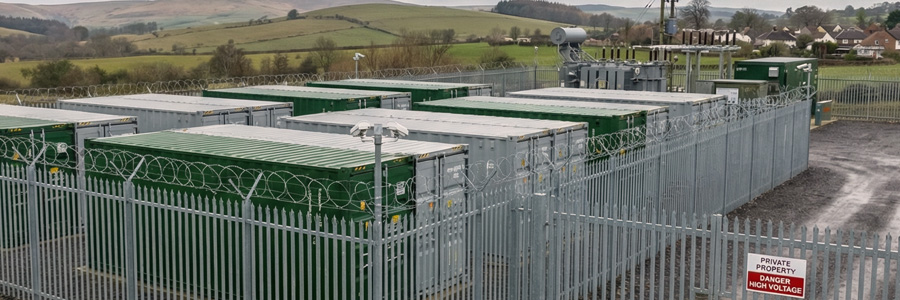
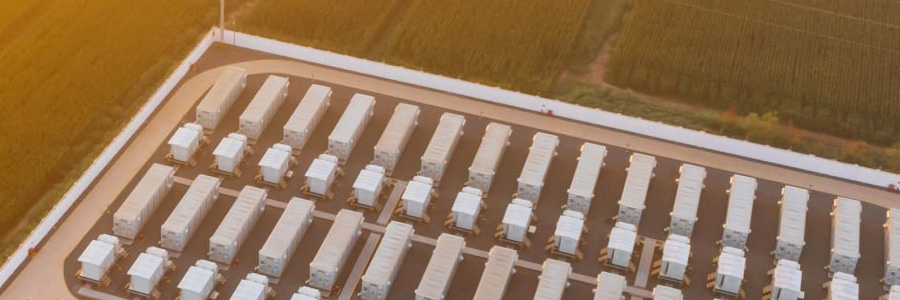
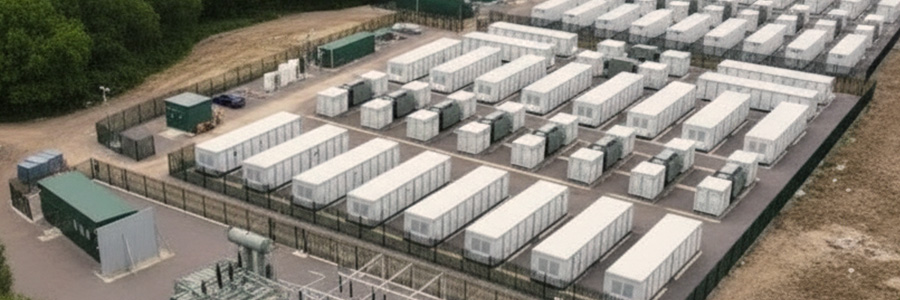
Think about what’s actually sitting behind that fence. High-voltage electrical equipment. Dense arrays of lithium-ion batteries with a real fire and thermal runaway risk. Sophisticated power conversion systems with strong resale value. And in many cases, all of this is located in a remote or semi-rural area, unmanned in normal operation, and monitored remotely. If something goes wrong, or if someone decides to make something go wrong, response times from security or emergency services can be significantly longer than on a staffed, urban industrial site.
Many BESS projects are also co-located with solar farms, which extends the overall footprint and creates more boundary to manage. Individual schemes are now regularly exceeding 100 MW, with some consented projects above 500 MW. That’s an enormous concentration of value and risk behind a single perimeter.
The honest conclusion is that standard industrial security thinking, built around shift patterns, regular staff presence, and relatively compact plant, doesn’t map well onto a BESS compound. Protecting battery storage installations of this scale and complexity requires a bespoke approach. One that starts by understanding what’s actually at stake, and for whom.
The Evolving Threat Landscape: What’s Changing in 2026
BESS security risk is no longer theoretical. The threats are real, documented, and evolving. Anyone designing battery storage perimeter protection in 2026 needs to understand the current landscape, not just the one that existed when the industry was smaller.
Theft and targeted criminality
Organised criminal groups that previously focused on solar and wind sites are now turning their attention to battery storage compounds. Copper cabling, battery modules, inverters, and transformer components all have strong resale or scrap value. The renewables sector has seen repeated incidents where gangs systematically scout sites before targeting them, often returning multiple times once a site has been identified as under-protected. For BESS operators, this isn’t a peripheral risk; it’s the same pattern of organised metal theft that has been well-documented across UK energy infrastructure, now extending to storage.
Tampering and sabotage
At a BESS site, an intrusion isn’t just a theft risk, it’s potentially a safety event. Unauthorised physical interaction with security BESS containers or electrical equipment can create conditions that escalate into fire or thermal runaway. High-profile incidents at large lithium-ion storage plants overseas,including the well-documented Moss Landing fire in California, have shown how quickly a contained fault can become a major incident requiring complex emergency response. Perimeter security at a BESS site is therefore as much about preventing a safety catastrophe as it is about protecting assets.
Unauthorised access and liability
The regulatory environment around BESS is tightening. Planning authorities, fire and rescue services, and environmental regulators are all paying closer attention to how these sites manage access and safety. There is active movement towards formal environmental permitting for BESS, and guidance from national bodies increasingly emphasises the operator’s responsibility for robust risk management and demonstrable access control. A weak or undocumented perimeter strategy is no longer just a security gap. It can affect planning consent, insurance terms, and post-incident liability.
Reputational and grid-level risk
For utility-scale projects contracted to provide system services, the stakes are higher still. A serious security incident can put grid support contracts and availability commitments at risk, and the reputational fallout from a visible fire or environmental incident moves quickly. Boards, lenders, and long-term asset managers are increasingly asking hard questions about BESS security, and “we have a fence” is not the answer they’re looking for.
A Risk Assessment Led Approach to Battery Storage Perimeter Protection
Here’s the thing about BESS perimeter security: the gap between a well-protected site and an exposed one is rarely the brand of fence or camera. It’s whether those measures are grounded in a clear, documented understanding of risk. A risk assessment led approach means designing security around how a site could actually be attacked or misused, not around a generic industry standard that fits everywhere and protects nowhere especially well.
The framework itself isn’t complicated. But applying it carefully to each specific site is what makes the difference.
Step 1 — Site classification and threat identification
Start by understanding what you’re defending and who you’re defending against. That means looking honestly at the site’s size and layout, its location (remote rural, edge of town, industrial estate), and how easy it is to approach; via roads, tracks, public footpaths, or neighbouring land. Rights of way, informal desire lines, and proximity to co-located solar or substation infrastructure all affect how accessible and attractive the site is. From this picture, you can build a realistic threat list that distinguishes between organised criminality, opportunistic theft, vandalism, activist interference, and insider risk, because each of those requires a different response.
Step 2 — Consequence mapping
Once you know what the threats are, map out what would actually happen if each one materialised. For BESS, this goes well beyond “stolen kit.” Could tampering contribute to a fire or thermal event? What are the replacement costs and lead times for key components? What are the environmental and liability implications of a serious incident? And for grid-connected projects, what would a prolonged outage mean for contractual performance? This consequence mapping lets you weight risks properly by impact, not just likelihood, and makes it much easier to justify stronger measures where the downside is genuinely catastrophic.
Step 3 — Likelihood assessment
Consequence alone isn’t enough. You also need a grounded view of how likely each threat is in this specific context. A remote rural site with poor passive surveillance and easy vehicle access via unlit lanes looks very different from an urban fringe location with neighbouring businesses and regular police patrols. Local crime history, road visibility, natural barriers like ditches or hedgerows, and any known activist or community sensitivities all feed into a realistic likelihood score. This step stops every risk being treated as “critical” by default and helps separate scenarios that genuinely warrant a heavy response from those that don’t.
Step 4 — Gap analysis against current or planned provision
With threats, consequences, and likelihood all understood, compare this risk picture against what the site actually has, or what’s currently planned in terms of security. This gap analysis looks at perimeter lines, access points, surveillance coverage, and how all of that aligns with planning conditions, DNO requirements, and insurer expectations. It often surfaces mismatches between paper and reality: gates left open for convenience, informal access tracks that bypass the main entrance, dead zones in detection coverage, or fencing for battery storage enclosures that technically meets a planning condition but doesn’t actually address the risk it was intended to manage.
Step 5 — Proportionate response selection
Only once the first four steps are complete does the conversation turn to specific measures: battery storage fencing specification and height, security toppings, PIDS, CCTV and analytics, lighting strategy, access control, response protocols, integration with fire and monitoring systems. Because these choices are made against a defined risk picture, they can be scaled sensibly. Heavier, higher-spec solutions where consequence and likelihood both justify them, more measured approaches where risk is genuinely lower. This sequencing keeps security spend proportionate, defensible, and tailored, and avoids the all-too-common trap of copying the same perimeter design across a whole portfolio of sites regardless of their individual exposure.
What Good Perimeter Security Looks Like for a BESS Site in Practice
Good perimeter security for a BESS project is less about any single product and more about how physical and electronic measures work together around the principles of deter, detect, delay, respond. Because most standalone battery sites won’t have on-site security teams or multiple inner rings of defence, the outer perimeter has to do more of the heavy lifting than it would on a typical industrial scheme.
Deter
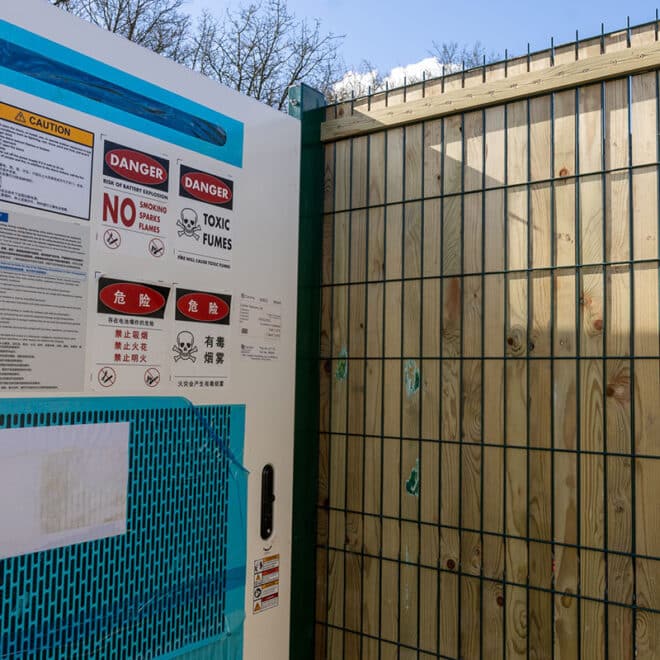
The first job of the perimeter is to discourage approach in the first place. For BESS, that usually means a visibly robust battery storage fencing system with clear boundary definition, controlled access points, and prominent signage communicating legal boundaries, CCTV monitoring, and safety hazards. Where a site is visible from roads or public rights of way, the perceived difficulty of entry; height, construction quality, toppings, plays a significant role in whether organised thieves or opportunists decide to test the boundary at all. First impressions matter.
Detect
Because sites are typically unmanned, rapid and reliable detection is critical. The perimeter fence should be designed to work effectively with detection technologies; analytics-enabled CCTV, fence-mounted sensors, or virtual tripwires that cover likely approach routes and vulnerable corners. The goal is an actionable alarm as early as possible in any intrusion sequence, with camera views that allow a monitoring centre to verify the event and initiate a response. A fence that rattles in the wind or flexes easily under pressure makes tuning those systems much harder; a more rigid, engineered solution provides a cleaner platform for detection technology to work from.
Delay
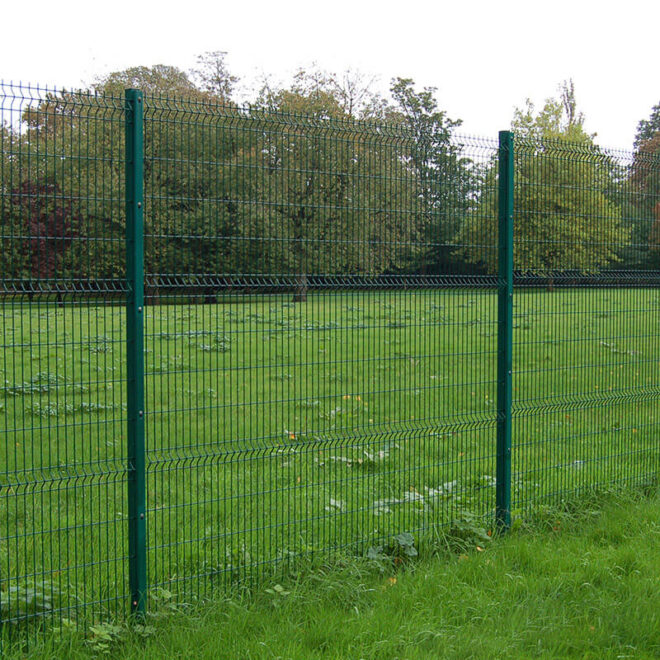
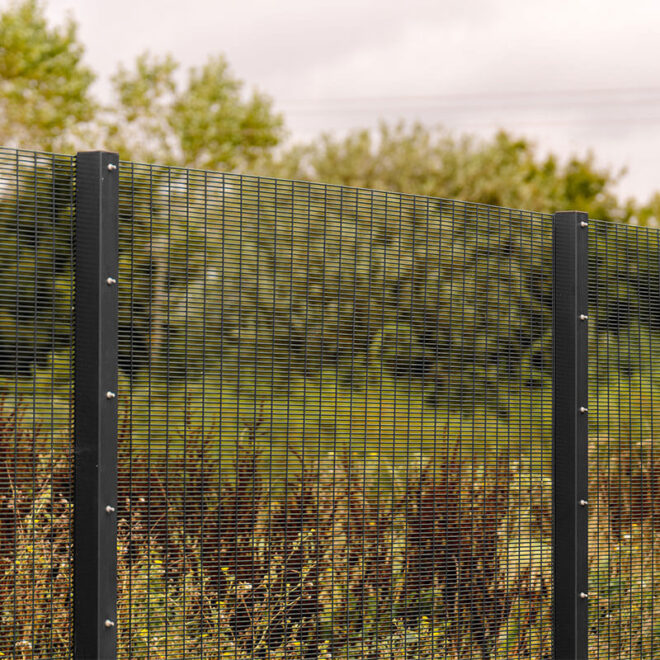
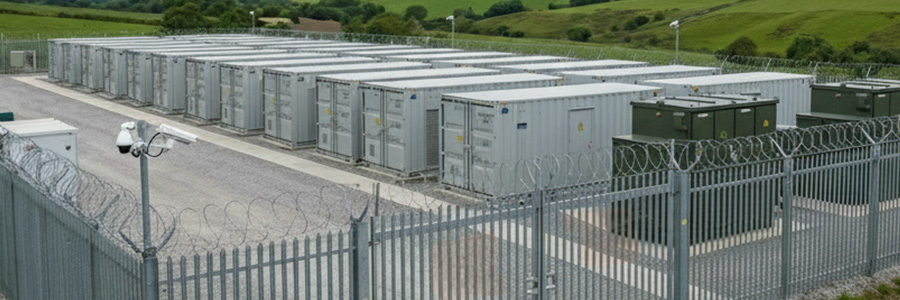
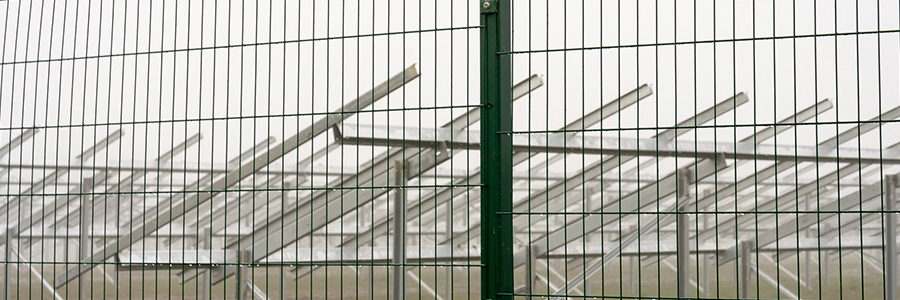
On many standalone BESS sites, the outer fence is the only physical line of defence between the public and high-value equipment, so it has to provide meaningful resistance against climbing and cutting. Standard timber boarding or basic agricultural fencing generally lacks the structural strength and cut resistance needed to slow a determined intruder for long enough to matter. Well-specified fencing for battery storage enclosures is often a better fit: a good mesh panel system can obscure sight lines into the compound (limiting reconnaissance and masking equipment layouts) while offering greater resistance to cutting tools and fewer handholds for climbing. Security toppings can be added where planning and context allow, with a different approach often required for urban or visually sensitive locations versus remote rural sites. Around BESS compounds specifically, metal fencing should always be correctly earthed to manage electrical safety and fault conditions.
Respond
Even the best perimeter won’t stop every attempt. The final piece of good design is ensuring the perimeter supports an effective response when it needs to. That means fence lines, gates, and access control that are aligned with clear response procedures, so attending engineers, security operatives, or emergency services can enter quickly and safely, even mid-incident. Good layout design avoids hidden corners and blind spots, allows patrol vehicles to circulate inside the boundary, and integrates with fire detection, plant shutdown, and remote monitoring systems. At a BESS site, a security breach and a safety event are not separate problems, they need to be managed as one.
The Cost of Getting It Wrong
The business case for investing properly in BESS security is straightforward but it’s worth being direct about what “getting it wrong” actually costs, because the numbers are real and the consequences go further than most people anticipate.
Organised crime targeting UK renewables infrastructure has escalated sharply in recent years. Solar and storage facilities have seen repeated raids where gangs strip cabling and equipment from sites that have been identified as under-protected, often returning multiple times within weeks. Individual sites have suffered losses exceeding £250,000 once replacement works, emergency procurement, and downtime are included. Industry crime data records hundreds of kilometres of cable stolen from renewables projects in under a year. For a BESS project, that pattern would mean not just material replacement and repair, but extended outages, liquidated damages, and difficult conversations with investors.
The insurance picture is shifting too. Guidance from insurers on renewable energy infrastructure is increasingly explicit: poor perimeter security is a key driver of repeat claims, and policy terms, premiums, and even insurability can be affected where known vulnerabilities aren’t addressed. At the same time, national guidance from fire and rescue services and BESS-specific bodies makes clear that operators carry responsibility for safe design, robust risk management, and maintaining usable access for emergency responders. A serious incident where fire service access is compromised by unsecured gates or unmanaged boundaries creates exposure not just with insurers, but with HSE and planning authorities.
All of which reinforces a straightforward point: the real cost of getting BESS perimeter security wrong is rarely just the fence repair. It’s the cumulative impact on availability, compliance, relationships with counterparties, and the confidence of everyone who has a stake in the asset performing as it should. Designing the perimeter around the realistic worst-case scenario from the outset, and based on a proper risk assessment, is almost always cheaper than fixing it after a preventable breach.
Getting It Right First Time
A risk-led approach to BESS security only works if everyone involved is in the room from the start. When security consultants, perimeter manufacturers, and asset owners work in isolation, each making assumptions about what the others will handle, the gaps don’t always show up on drawings. They show up once the site is built and operational, when a vulnerability that could have been designed out in an afternoon now requires rework constrained by planning conditions, grid connection agreements, or insurance requirements. At that point, “fixing the fence” is rarely just about the fence.
The better model is straightforward: security that is correctly specified early, tested against a proper risk assessment, and carried through design and construction without needing to be unpicked later. That means genuine collaboration, not just coordination. Security consultants bring the threat modelling and methodology. Perimeter manufacturers contribute practical knowledge of what different systems can realistically withstand and how they perform under real-world conditions. Asset owners and developers bring the commercial, operational, and planning context that determines what’s actually deliverable. When those three perspectives come together before designs are frozen, the result is a perimeter that reflects the site’s real risk profile — not one that was value-engineered against a specification nobody fully understood.
That’s the space Alexandra Security works in. We have experience delivering battery storage fencing and perimeter solutions for energy and infrastructure projects where risk, planning, and practicality all have to align, and where protecting battery storage installations correctly, first time, genuinely matters. If you’re involved in an upcoming BESS or co-located solar and storage project, whether you’re at concept stage, working through planning, or moving into detailed design, we’d welcome a conversation. The earlier we can talk, the more useful that conversation will be.
Click here for more information on our Battery Storage and Solar Farm Security Fencing solutions