Published:
The UK’s solar generation sector is entering a period of unprecedented expansion. Forecasts suggest that 2026 will mark another record year, with an expected 5–5.5GW of additional capacity planned to come online. A year on year increase of nearly 50%. If realised, this would represent the single largest annual increase in UK solar deployment to date.
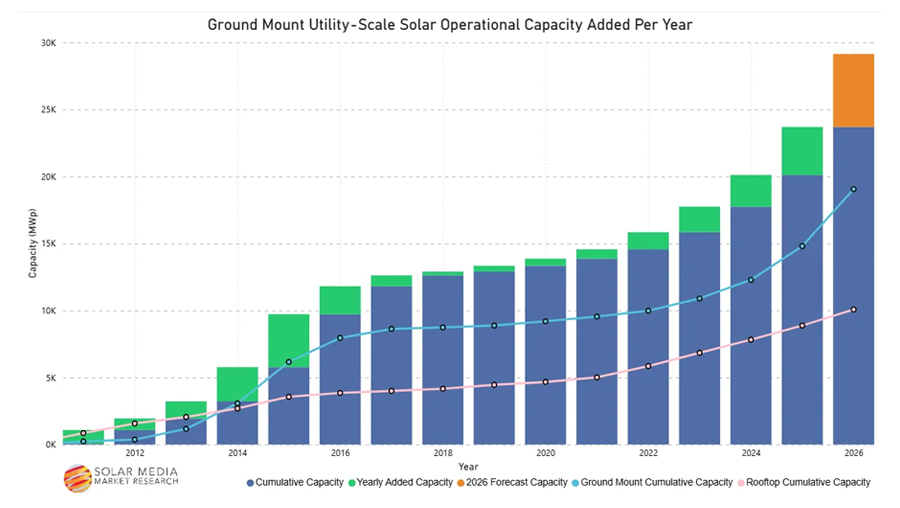
Much of this growth is being delivered by ground mounted installations, which now account for the majority of large scale solar projects. In 2025, the amount of new ground mounted solar nearly doubled compared to 2024, reflecting strong investor confidence, falling technology costs, and a clear push toward energy independence.
However, as the quantity, size, and strategic relevance of solar farms increase, a new reality is taking shape. Solar power is no longer a peripheral renewable option but a vital component of the UK’s national energy infrastructure. With that shift comes heightened exposure to operational and financial risks. One of the most significant areas that must evolve alongside generation growth is perimeter security.
Growth Increases Exposure: Understanding the Changing Risk Profile
With every new installation, the geographic footprint of UK solar expands. Many sites are located in rural or semi remote areas, often chosen for their open land, grid proximity, and limited environmental disruption. Yet these same characteristics create inherent vulnerabilities in terms of physical security.
Solar farms, particularly in their early years, have been perceived as low risk environments. However, recent industry data and incident reports suggest otherwise. Theft, vandalism, and sabotage are becoming more frequent and more sophisticated. The visibility of assets, combined with their relative isolation, makes solar farms attractive to both opportunistic offenders and organised criminal groups.
Among the most damaging incidents is cable theft. Criminals targeting copper and other valuable metals within power and communications cables. A single breach can lead to:
- Extended downtime, often lasting several days or weeks while repairs and testing are completed
- Interruption of energy supply to the grid, affecting contractual obligations and investor confidence
- Costly replacement works and insurance claims, as well as potential damage to associated infrastructure
- Direct loss of revenue, as generation is halted and performance guarantees are impacted
For funds and operators drawn to solar for its low risk, stable returns, such incidents fundamentally threaten the predictability that underpins the investment model. The business case for solar relies on continuous uptime and consistent yield; any interruption directly erodes profitability.
As a result, the question is no longer whether to include security in project design, but how early and how rigorously it should be integrated. Waiting until late project stages or treating security as a compliance formality almost guarantees higher costs, reduced effectiveness, and missed opportunities for smarter asset protection.

Why Early Engagement on Security Design Matters
Perimeter security should not be an afterthought. Decisions about fencing type, detection systems, and integration with CCTV or monitoring infrastructure have significant implications. Not only for project cost and aesthetics, but also for operational reliability, regulatory compliance, and long term asset value.
Early stage engagement between project designers, security specialists, and manufacturers ensures that protection measures are proportionate, compliant, and cost efficient. It allows security solutions to align seamlessly with site layout, equipment placement, and maintenance access requirements, rather than being retrofitted as a response to insurance feedback or perceived risk later on.
Moreover, early specification encourages consistency across multi site portfolios. Many developers are scaling up rapidly, delivering dozens of solar sites under a single investment strategy. A unified, performance based perimeter approach ensures standardised resilience, simplifies maintenance, and supports better predictability for investors and insurers alike.
From Mega Projects to Micro Solar: Broadening the Risk Landscape
The UK solar market is diversifying, with a growing mix of large scale grid connected schemes and smaller, decentralised “micro” solar installations on farmland or commercial estates. This creates a broader spectrum of risk profiles, but a common thread remains: perimeter vulnerability is rising faster than most mitigation strategies are adapting.
- Large scale projects, such as Cleve Hill in Kent, attract attention due to their scale, high asset value, and strategic grid connections. These facilities are more likely to face structured, repeated attempts at intrusion or theft, and must therefore adopt a higher level of defence through integrated detection and deterrent systems.
- Smaller distributed installations, often on agricultural land, may suffer more from opportunistic incursions and vandalism. Yet because these sites are less frequently attended or monitored, even small scale theft or damage can cause disproportionate disruption and repair costs.
Whether a project spans 5 acres or 500, the underlying challenge is the same: traditional rural fencing standards are inadequate for modern energy infrastructure. Wire or deer fences define a boundary but do little to deter, delay, or detect. The industry must pivot to performance based solar farm perimeter security that reflects the true operational and financial consequences of breach.

Solar Farms as Critical Infrastructure
As solar power becomes integral to the UK’s energy resilience and decarbonisation goals, it increasingly meets the definition of critical national infrastructure (CNI). With that status comes an expectation of risk informed, standards based security design.
Other CNI sectors such as utilities, water, and power generation, have already embedded risk led frameworks into their security decision making. These frameworks balance three core components:
- Assets – the value and function of what is being protected
- Threats – the realistic likelihood and type of attack or interference
- Consequences – the operational, financial, and reputational impact if security measures fail
When the potential consequences are high, the tolerance for risk must decrease accordingly. The same logic should now apply to solar farms. As part of the broader energy network, an extended outage or disruption doesn’t just affect one site. Tt can undermine supply resilience, breach power purchase agreements, and erode investor confidence across portfolios.
The government’s evolving view on energy system security further strengthens this position. Current CNI guidance, LPCB standards (LPS 1175), and Secured by Design principles all highlight the need for layered, performance rated perimeter systems capable of withstanding deliberate attacks. For solar, adopting this methodology is not about over engineering, but about risk realism, securing assets in proportion to their national and financial importance.
A Risk Led, Layered Approach to Perimeter Protection
The concept of layered defence: deter, detect, delay, respond, has long been central to security design. Applying it effectively to solar farms ensures security measures are both robust and practical.
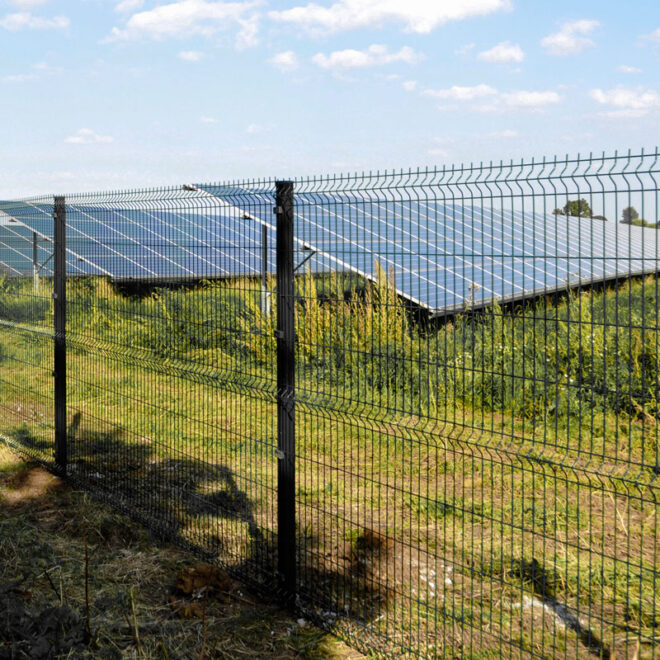
Deterrence starts with visual clarity. A well specified, purpose built high security fencing system immediately communicates that a site is protected, monitored, and difficult to access. Strong visual deterrents often stop opportunistic threats before they begin.
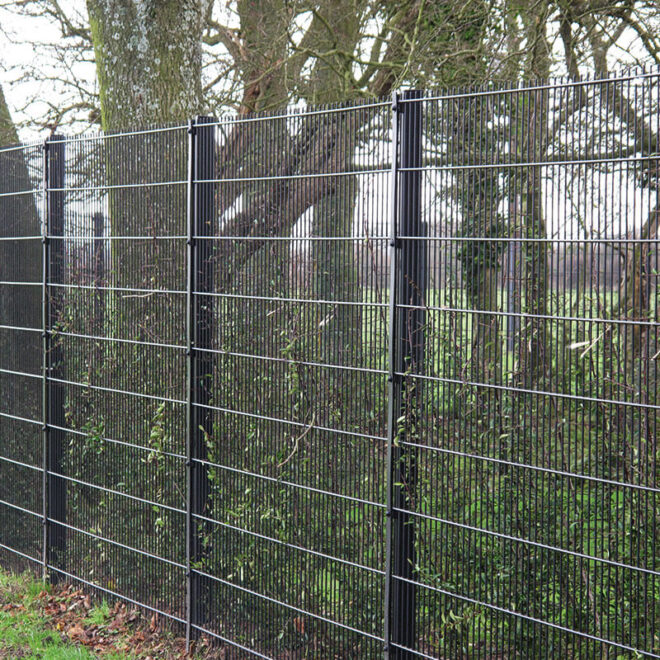
Delay and denial of entry come from the physical performance of the barrier itself. Where traditional agricultural fencing can be breached within seconds, higher strength welded mesh systems dramatically increase entry time, forcing an intruder to make noise, use tools, or expose themselves for longer. All of which raise detection probability.
Detection layers, such as vibration sensors, buried cable systems, or integrated CCTV analytics, provide immediate alerting and escalation when a breach is attempted. For high value installations, integration between physical anti-climb fencing and detection systems forms an indispensable partnership. One that turns passive barriers into active protective systems.
Lastly, response — whether through on site personnel, rapid dispatch, or remote verification, closes the loop, minimising incident duration and potential loss.
At Alexandra Security, our perimeter solutions are designed specifically for such layered approaches. We work closely with specifiers to define the performance requirements, environmental considerations, and integration points necessary to deliver fully realised protection.

The Role of Specifiers, Consultants, and Asset Owners
For specifiers and security consultants, today’s solar market presents an opportunity for leadership. Projects that integrate security from concept stage not only mitigate risk more effectively but also demonstrate compliance, investor diligence, and operational maturity.
Integrating perimeter performance into planning and specification documentation gives suppliers clear direction, reduces procurement ambiguity, and avoids late cycle redesigns. Consultants play a key role in helping clients balance initial cost against lifetime value. A well engineered perimeter solution often yields substantial operational savings by preventing downtime, claims, and reputational harm.
For investors and asset owners, perimeter protection is best viewed not as a capital expense but as an investment in stability. Effective perimeter security safeguards:
- Operational uptime, ensuring maximum energy production
- Predictable revenues, maintaining yield targets and investor expectations
- Insurance resilience, by satisfying underwriters’ risk mitigation requirements
- Long term asset value, protecting balance sheet integrity
In short, security enables performance. By preventing interruptions before they occur, it secures both physical assets and financial assurance.
Security as an Enabler — Not an Obstacle
The perception of security as a constraint on design, budget, or schedule is increasingly outdated. When engaged early, security specification streamlines delivery: it prevents costly rework, de-risks planning approval, and supports regulatory compliance. Most importantly, it gives investors, insurers, and operators tangible assurance that their energy assets will perform as intended.
As the UK solar industry evolves into a major pillar of national infrastructure, perimeter security will define the resilience and credibility of this transition. The sector’s continued success depends not only on efficient generation but also on protecting that generation from disruption.
At Alexandra Security, we support this mission by working collaboratively with architects, contractors, consultants, and asset managers from concept to completion. Our expertise in specifying risk appropriate, standards compliant perimeter systems helps projects achieve operational assurance and investor confidence in equal measure.
To discuss your project or explore how a tailored, risk led perimeter solution can support your solar development goals, contact our team today.